
Hamstring Injury & Recovery In Fort Lauderdale, FL

- Hamstring Injury Treatment In Fort Lauderdale
- What Is A Hamstring Injury?
- What Hamstring Injury Treatment Can Help With
- When Hamstring Symptoms Need Urgent Or Specialist Care
- Related Conditions We Evaluate With Hamstring Pain
- Who May Be A Good Fit For Hamstring Injury Care
- How We Evaluate And Treat Hamstring Injuries
- What To Expect At Your First Hamstring Injury Evaluation
- What Patients Say About Their Recovery Experience
- Related Services For Hamstring Recovery
- Hamstring Injury Care For Fort Lauderdale, Plantation, And Broward County
- Meet The Team Supporting Your Hamstring Recovery
- Sources And Clinical References
- Frequently Asked Questions About Hamstring Injury Treatment
Hamstring Injury Treatment In Fort Lauderdale
A hamstring injury can stop a sprint mid-stride or build slowly as tightness at the back of the thigh never fully clears. At Carpe Diem Chiropractic, care begins with a detailed history and examination to identify which tissue is involved, how significant the injury appears, and whether conservative care is appropriate. When the findings suggest a tendon avulsion, a significant tear, or a problem outside chiropractic scope, imaging or specialist referral comes first.

What Is A Hamstring Injury?
The hamstrings are three muscles at the back of the thigh that cross both the hip and the knee. Most acute injuries happen during high-speed running, when the muscle is lengthening under load as the leg swings forward, or during stretching-type movements such as kicking, dancing, or reaching into a deep lunge. Injuries range from mild strains to partial tears and, less often, a tendon pulling away from the sit bone. Hamstring tendinopathy is a slower, overuse problem that causes deep pain near the sit bone, often worse with sitting, hill running, or bending forward.
Hamstring injury treatment is not a single technique. It begins with screening for injuries that need medical management, then grades the injury and builds a plan around progressive strengthening, with hands-on care used to support that work. Pain at the back of the thigh can also come from the low back or an irritated sciatic nerve, so the examination checks for those sources before a plan is set.
The plan depends on how the injury happened, its location and severity, your history of previous strains, and the demands of your sport. Some patients need MRI, ultrasound, or an orthopedic opinion before conservative care begins.

What Hamstring Injury Treatment Can Help With
Pain And Sensitivity Management. Early care focuses on settling pain so you can walk, sit, and move without guarding. The first step is confirming the pain is coming from the hamstring and not from the spine or nerve.
Restored Stride And Range Of Motion. A strained hamstring often shortens your stride and limits how far you can bend forward or extend the knee. Range is restored gradually through movement and loading rather than aggressive stretching of an injured muscle.
Rebuilt Hamstring Strength. Strength in lengthened positions is the foundation of hamstring recovery. Research in athletes supports lengthening-focused rehabilitation and exercises such as the Nordic hamstring curl, introduced and progressed according to your tolerance.
Criteria-Based Return To Sport. Return to running and sprinting is staged by what you can do, including strength side to side, sprint tolerance, and how you respond the next day, rather than by how many weeks have passed.
Lower Risk Of Re-Injury. Hamstring strains have a high recurrence rate, often in the weeks after returning to play. Addressing remaining strength gaps, training load, and sprint exposure may help reduce that risk, although no program can eliminate it.
Clear Plan And Coverage Review. Florida allows direct access to chiropractic care, so you do not need a physician referral to book, although some insurance plans set their own requirements. We review your coverage and expected out-of-pocket costs with you before care begins, and payment plan options are available.

When Hamstring Symptoms Need Urgent Or Specialist Care
Seek prompt medical care if you felt or heard a pop high in the back of the thigh followed by large bruising, a gap you can feel, or significant difficulty walking, as these can signal a tendon avulsion that may need early surgical evaluation. Urgent care is also needed for inability to bear weight, rapidly increasing swelling, calf or thigh pain with swelling, warmth, or redness, numbness or weakness spreading down the leg, numbness in the groin or saddle area, changes in bowel or bladder control, or fever with leg pain. In teenage athletes, sudden pain at the sit bone after sprinting or kicking should be assessed for a growth plate avulsion. Chiropractic care should not delay assessment for any of these concerns.

Related Conditions We Evaluate With Hamstring Pain
Pain at the back of the thigh can involve more than one structure. We evaluate the full symptom pattern and recommend care only when the findings are appropriate for conservative treatment.

Sciatica Treatment
Learn More
Lower Back Pain Treatment
Learn More
Knee Pain Treatment
Learn More Quad Injury Treatment

Chronic Pain Treatment
Learn MoreWho May Be A Good Fit For Hamstring Injury Care
Hamstring injury care may be considered for runners, field and court athletes, dancers, and active adults who do not show urgent red flags and are dealing with pain, tightness, weakness, or repeated strains at the back of the thigh. Symptoms may start suddenly during a sprint or build gradually over weeks of training.
An evaluation may be appropriate when:
- You felt a sudden grab or pull at the back of the thigh while sprinting, kicking, or stretching, and you can still walk.
- A hamstring keeps tightening or re-straining each time you return to speed work.
- Deep pain near the sit bone worsens with sitting, hills, or lunges.
- Rest has calmed the pain, but strength and confidence in the leg have not returned.
- You have been cleared after a hamstring injury or repair and need a structured path back to sport.
We may refer you for imaging, an orthopedic consultation, or another provider when the symptoms or history fall outside chiropractic scope.

How We Evaluate And Treat Hamstring Injuries
Hamstring care begins with identifying what was injured and how much load it can handle today. Your chiropractor reviews how the injury happened, when symptoms began, previous strains, and your training schedule before performing a targeted examination. Digital X-rays may be taken on site when clinically relevant, and outside MRI or ultrasound may be recommended for suspected tears. The resulting plan combines progressive strengthening with supporting hands-on care, or referral when needed.
Injury History And Safety Screening
We ask whether the injury happened during sprinting or a stretching-type movement, whether you felt a pop, how quickly bruising appeared, and whether you can walk normally. The mechanism of injury helps indicate which part of the muscle or tendon is likely involved and how long recovery may take.
Orthopedic, Neurological, And Movement Examination
We assess where the pain is, range of motion, strength at different hip and knee positions, walking and running mechanics, and neural tension tests that help separate a hamstring injury from sciatic nerve or low back involvement. Testing is adapted to the stage of injury and your comfort.
Imaging Or Referral When Needed
X-rays show bone, not muscle, so they are used selectively, such as when a bony avulsion is suspected in a younger athlete. When the examination suggests a significant tear or tendon avulsion, we refer for MRI or ultrasound and orthopedic assessment, because some of these injuries have better outcomes when surgical evaluation happens early.
Individualized Conservative Care
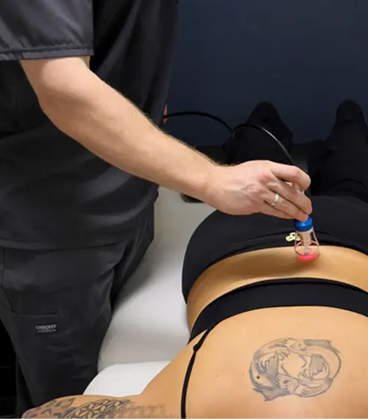
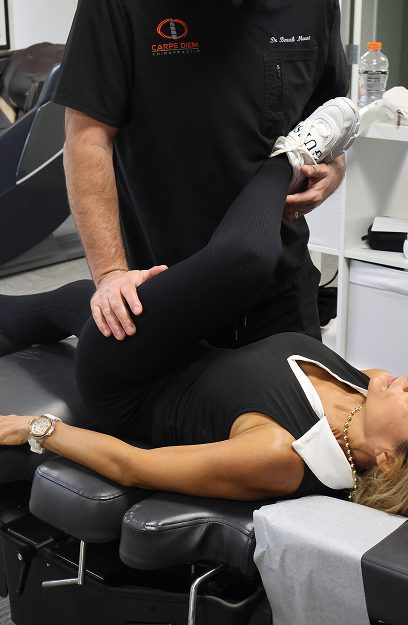
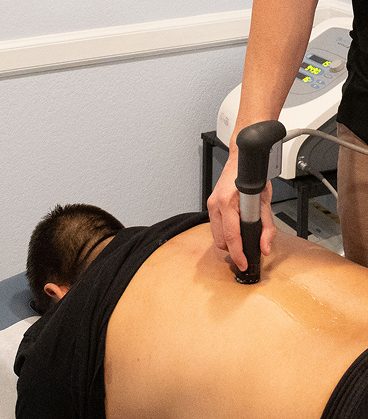
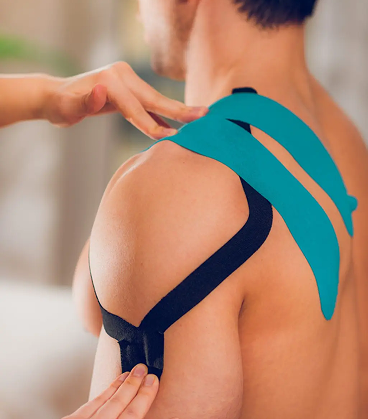
Progressive loading is the core of the plan, moving from gentle isometric work to lengthened and eccentric exercises, then to running and sprint progressions. Depending on the findings, supporting care may include Active Release Technique, instrument-assisted soft tissue work, dry needling, kinesiotaping, laser therapy, or shockwave therapy for persistent hamstring tendinopathy. Deep massage and forceful stretching of a fresh strain are generally avoided in the early stage.
Progress Reviews And Return-To-Run Criteria
Follow-up visits track pain-free range, strength side to side, running tolerance, and next-day response. A lack of expected progress or new symptoms may change the plan or lead to referral.

What To Expect At Your First Hamstring Injury Evaluation
Your first appointment runs about an hour. Wear shorts or clothing that allows access to the thigh and hip, and bring any imaging reports, surgical notes or rehabilitation protocols, and a summary of your current training. Do not delay urgent medical care to schedule this visit.
Step 1: Intake And Injury History. You describe how and when the injury happened, what you felt at the time, previous hamstring or back problems, and the activities now affected.
Step 2: Orthopedic, Neurological, And Movement Examination. Your chiropractor completes an examination suited to the stage of injury, including range of motion, strength testing, and screening of the low back and sciatic nerve.
Step 3: Imaging Or Referral Decision. Digital X-rays may be taken on site when clinically appropriate. If the findings point to a significant tear or avulsion, we refer you for advanced imaging or orthopedic assessment before conservative care begins.
Step 4: Findings And Care Plan. We review the findings with you, explain whether conservative care is appropriate, and outline a plan with a realistic timeline and return-to-sport criteria.
Step 5: Treatment And Progress Tracking. When care is appropriate, most patients begin treatment the same day. Follow-up visits pro

What Patients Say About Their Recovery Experience


Related Services For Hamstring Recovery
Hamstring recovery often draws on more than one service because pain, tissue sensitivity, and strength gaps all need attention. We add supporting services only when the examination shows they fit the injury and stage of recovery.

Hamstring Injury Care For Fort Lauderdale, Plantation, And Broward County
Carpe Diem Chiropractic evaluates hamstring injuries at our Fort Lauderdale office on SE 17th Street and our Plantation office on NW 70th Avenue. We see runners training along the beachfront, soccer players, and active adults from Fort Lauderdale, Plantation, Sunrise, Davie, Wilton Manors, Lauderhill, and communities across Broward County.
Meet The Team Supporting Your Hamstring Recovery




Sources And Clinical References
These references support the page’s hamstring injury definition, red flag guidance, rehabilitation approach, and return-to-sport criteria. Clinical decisions remain specific to the patient and the individual injury.
- Source: Mayo Clinic: Hamstring Injury. Supports: Describes common hamstring injury symptoms, mechanisms, and signs that warrant medical attention.
- Source: American Academy of Orthopaedic Surgeons, OrthoInfo: Hamstring Muscle Injuries. Supports: Supports injury grading and the role of surgical evaluation for tendon avulsions.
- Source: Ekstrand J, Hägglund M, Waldén M. Epidemiology of muscle injuries in professional football (soccer). American Journal of Sports Medicine. 2011;39(6):1226-1232. Supports: Identifies the hamstrings as the most commonly injured muscle group in football.
- Source: Askling CM, Tengvar M, Thorstensson A. Acute hamstring injuries in Swedish elite football: a prospective randomised controlled clinical trial comparing two rehabilitation protocols. British Journal of Sports Medicine. 2013;47(15):953-959. Supports: Supports lengthening-focused rehabilitation and the link between injury mechanism and recovery time.
- Source: van Dyk N, Behan FP, Whiteley R. Including the Nordic hamstring exercise in injury prevention programmes halves the rate of hamstring injuries: a systematic review and meta-analysis of 8459 athletes. British Journal of Sports Medicine. 2019;53(21):1362-1370. Supports: Supports the Nordic hamstring exercise as part of injury reduction programs.
- Source: Ardern CL, Glasgow P, Schneiders A, et al. 2016 Consensus statement on return to sport from the First World Congress in Sports Physical Therapy, Bern. British Journal of Sports Medicine. 2016;50(14):853-864. Supports: Supports criteria-based, staged return to sport.
Evidence limit: These sources do not establish that every hamstring injury is appropriate for chiropractic care or that a specific treatment prevents re-injury. Recovery time and outcomes vary with the injury, its location, and the individual.
Frequently Asked Questions About Hamstring Injury Treatment
Recovery time varies widely. Mild strains may settle within a few weeks, while more significant tears, injuries involving the tendon, and stretching-type injuries often take longer. The timeline is estimated after the examination and adjusted as you progress.
Gentle, pain-free movement is usually encouraged early, but forceful stretching of a fresh strain can irritate the healing tissue. Flexibility tends to return as strength is rebuilt through progressive loading.
Both can cause pain at the back of the thigh. Sciatic nerve irritation may bring tingling, numbness, or pain that travels below the knee, often with low back symptoms. The examination includes nerve and spine screening to tell them apart.
Not every hamstring strain needs imaging. MRI or ultrasound may be recommended when a significant tear or tendon avulsion is suspected, when recovery is slower than expected, or when the result would change your treatment.
Book A Hamstring Injury Evaluation In Fort Lauderdale
A careful evaluation can help determine whether your hamstring symptoms are appropriate for conservative care or need another medical pathway. Book an evaluation with Carpe Diem Chiropractic to identify the injured tissue, assess your strength and movement, and receive a clear plan for returning to the activities you enjoy.
Book An Evaluation