
- Quick Answer: What Is Lower Back Pain?
- Understanding Lower Back Pain
- How Lower Back Pain Shows Up Day to Day
- Common Contributors and Drivers
- Red Flags and When to Seek Urgent Care
- How We Assess Your Case
- Your Personalized Treatment Plan
- Evidence Snapshot
- Patient Case Study
- Watch: Lower Back Pain Explained
- Free Lower Back Pain Guide
- Frequently Asked Questions
- References
- Meet Our Doctors
- Patient Reviews
- Ready to Get Started
Lower Back Pain Treatment in Fort Lauderdale, FL


Table of Contents
- Quick Answer: What Is Lower Back Pain?
- Understanding Lower Back Pain
- How Lower Back Pain Shows Up Day to Day
- Common Contributors and Drivers
- Red Flags and When to Seek Urgent Care
- How We Assess Your Case
- Your Personalized Treatment Plan
- Evidence Snapshot
- Patient Case Study
- Watch: Lower Back Pain Explained
- Free Lower Back Pain Guide
- Frequently Asked Questions
- References
- Meet Our Doctors
- Patient Reviews
- Ready to Get Started

Quick Answer: What Is Lower Back Pain?
Lower back pain is discomfort, stiffness, or sharp sensation in the lumbar region of the spine, the area spanning from just below the ribcage to the top of the pelvis. It is one of the most common musculoskeletal complaints in the world, affecting people of all ages and activity levels. In most cases, lower back pain stems from mechanical causes such as muscle strain, disc irritation, joint dysfunction, or nerve compression, rather than from a serious underlying disease.
First-line care typically includes movement-based therapy, manual treatment, and targeted exercise to address the root cause rather than masking symptoms. Many patients improve significantly without the need for surgery or long-term medication.
Seek immediate medical attention if your lower back pain is accompanied by loss of bladder or bowel control, numbness in the groin or inner thighs, fever, or pain following significant trauma. These may indicate a condition requiring urgent evaluation.

Understanding Lower Back Pain: More Than a Sore Muscle
The lumbar spine is a complex structure made up of five vertebrae (L1 through L5), intervertebral discs that act as shock absorbers, facet joints that guide movement, and an intricate network of nerves, muscles, and ligaments. When any of these components are irritated, overloaded, or compressed, the result is pain that can range from a dull, persistent ache to a sharp and debilitating sensation.
Lower back pain is often categorized by how long it lasts. Acute lower back pain develops suddenly and typically resolves within four to six weeks with appropriate care. Subacute pain persists between six and twelve weeks. When pain continues beyond twelve weeks, it is considered chronic, and that persistence is usually a signal that the underlying mechanical or structural issue has not been adequately addressed.
A common myth is that lower back pain always means something is seriously wrong or permanently damaged. Research consistently shows that many structural findings on imaging, such as disc bulges or minor degenerative changes, are present in pain-free individuals as well. Context matters enormously. Another frequent misconception is that rest is the best treatment. In reality, prolonged bed rest tends to worsen outcomes. Guided movement and progressive loading are far more effective for most mechanical lower back conditions.

How Lower Back Pain Shows Up in Your Daily Life
Lower back pain rarely feels the same from one person to the next. The way it presents depends on the tissues involved, how long it has been building, and your daily movement patterns. Understanding your specific symptom picture is one of the first steps toward effective care.
Common Symptoms:
- A dull, persistent ache in the lower lumbar region or across the beltline
- Sharp pain in the lower left or lower right side of the back, sometimes worse on one side
- Stiffness and difficulty standing up straight, especially in the morning
- Pain that radiates down one or both legs, sometimes reaching the calf or foot (often described as sciatica)
- A sensation of the back “going out” with simple movements like bending or twisting
- Muscle spasms or cramping in the lower back or gluteal region
- Numbness, tingling, or weakness in the legs when nerve compression is involved

Patterns That Make It Worse
- Prolonged sitting, particularly at a desk or during long drives
- Bending forward repeatedly or lifting without proper mechanics
- Standing in one position for extended periods
- Transitioning from sitting to standing, especially after rest
Patterns That May Ease It
- Gentle walking or light movement after a period of rest
- Changing positions frequently throughout the day
- Applying heat to reduce muscle tension
- Specific stretches or decompression positions, depending on the cause
Functional Impact
Lower back pain is not just a physical issue. It disrupts sleep when even rolling over in bed becomes painful. It limits your ability to perform at work, exercise, or participate in the activities you enjoy. For many people in the Fort Lauderdale area who are active, outdoors-oriented, or physically demanding in their professions, lower back pain directly affects quality of life. Our goal at Carpe Diem Chiropractic is to get you back to doing what you love, pain free.

Why Does Lower Back Pain Happen? Common Drivers and Contributors
One of the most important questions our patients ask is: “Why did this happen to me?” The answer is rarely a single event or a single cause. Lower back pain is almost always the result of multiple contributing factors building up over time, until the load on the spine exceeds its capacity to recover.
Mechanical and Structural Factors
Lumbar disc herniation occurs when the soft inner core of an intervertebral disc pushes through the outer casing and presses on a nearby nerve root. Degenerative disc disease refers to the gradual breakdown of disc height and hydration over time, often beginning as early as the third decade of life. Facet joint dysfunction involves irritation or restricted movement in the small joints that connect each vertebra, and sacroiliac joint dysfunction creates instability or inflammation where the spine meets the pelvis. Each of these can produce overlapping symptom patterns, which is why precise assessment matters.

Lifestyle and Postural Contributors
- Prolonged sitting in a sedentary work environment with poor lumbar support
- Repetitive forward bending without adequate hip mobility
- Carrying excess body weight, which increases compressive load on the lumbar discs
- Poor sleep positioning that keeps the spine in sustained awkward positions
- High emotional stress, which increases muscle tension and lowers pain tolerance
Capacity and Recovery Mismatch
A concept that often surprises patients is that lower back pain is not always caused by doing too much. It is frequently caused by a mismatch between what the body is being asked to do and how prepared it is to do it. Someone who sits at a desk all week and then spends a weekend doing heavy yard work or playing recreational sport is placing a sudden demand on a spine that has not been progressively conditioned. Similarly, deconditioning after a previous injury, incomplete rehabilitation, or simply aging without maintaining core strength all reduce the spine’s resilience and raise the risk of pain with everyday tasks.

Red Flags: When Lower Back Pain Requires Urgent Attention
The overwhelming majority of lower back pain cases are mechanical and respond well to conservative care. However, a small number of presentations require prompt medical evaluation. At Carpe Diem Chiropractic, your safety is our first priority. If any of the following signs are present, please seek emergency or urgent medical care before scheduling a chiropractic appointment.
Seek Immediate Emergency Care If You Have
- Loss of bladder or bowel control, or new numbness in the groin, inner thighs, or genitals (possible cauda equina syndrome, a medical emergency)
- Lower back pain that follows a significant fall, motor vehicle accident, or direct spinal trauma
- Rapidly worsening leg weakness or bilateral leg numbness
Schedule an Urgent Medical Evaluation If You Have
- Lower back pain with unexplained fever, chills, or recent infection
- Significant and unexplained weight loss alongside back pain
- Back pain with a personal history of cancer that has not been recently evaluated
- Severe night pain that is not position-dependent and does not ease with rest
- Back pain in a person over 70 with a history of osteoporosis
If none of the above apply and your pain is localized to the lower back region with or without leg symptoms, mechanical care is appropriate and often highly effective. Our team will still ask about all of the above during your first visit to ensure we are providing the right care for your specific situation.

How We Assess Your Case: A Thorough, Individualized Approach
Not all lower back pain is the same, and not all treatment approaches are appropriate for every patient. At Carpe Diem Chiropractic in Fort Lauderdale and Plantation, we begin every new case with a structured evaluation designed to identify the specific structures involved, understand how your lifestyle and history are contributing, and rule out anything that requires a different level of care.
Your History
We start by listening with our complementary consultation. We want to understand when your pain began, what makes it better or worse, whether it is spreading into your legs or staying localized, how it affects your sleep and daily activities, and what treatments you may have already tried. This information shapes everything that follows and determines if we can proceed for our examination.
Physical and Functional Examination
Our physical exam includes orthopedic and neurological testing to evaluate the integrity of your lumbar discs, nerve roots, and facet joints. We assess your range of motion, posture, and movement quality. When leg symptoms are present, we perform specific tests to determine whether nerve compression is involved and at what level of the spine.
Differential Diagnosis
Part of our clinical responsibility is to distinguish between conditions that look similar but require different approaches. Lumbar disc herniation, spinal stenosis, sacroiliac joint dysfunction, piriformis syndrome, and referred pain from hip pathology can all produce lower back and leg symptoms. Identifying the primary driver of your pain allows us to build a more precise treatment plan.
Imaging: When It Is and Is Not Needed
Our office does prefer to take x-ray imaging to determine further injury, spinal alignment and structure, as long as clinical symptoms warrant them. If symptoms are severe or persistent, then MRIs may be ordered.

Your Personalized Lower Back Pain Treatment Plan
At Carpe Diem Chiropractic, we do not believe in a one-size-fits-all approach to lower back pain. Every patient receives a care plan tailored to their diagnosis, goals, activity level, and stage of recovery. We structure care in progressive phases, each building on the last.
Phase 1: Calm the Irritation
The first priority is to reduce pain and inflammation enough that you can participate meaningfully in your own recovery. This may involve spinal manipulation or mobilization to restore joint motion, soft tissue therapy to release tense or guarded muscles, and gentle neurodynamic techniques if nerve irritation is present. For acute flare-ups, we may also use modalities such as low-level laser therapy or PEMF therapy to support tissue healing without adding load to the spine.

Phase 2: Restore Motion
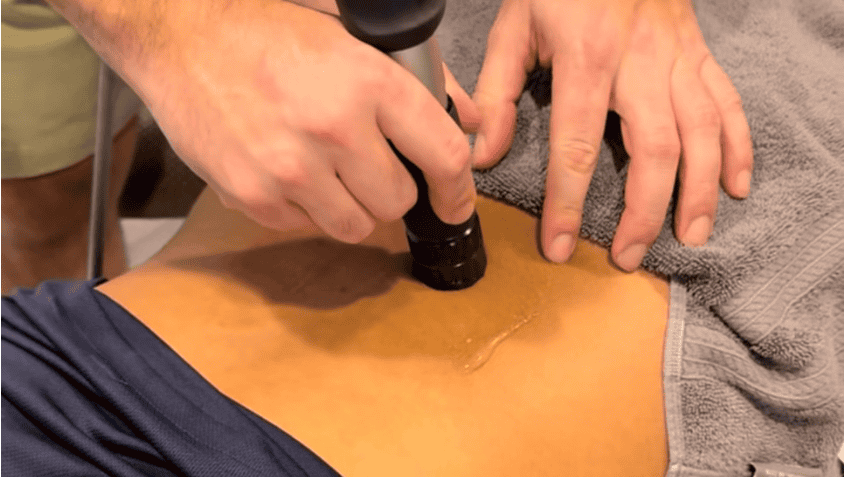
Once acute irritability has settled, we focus on restoring the mobility and movement quality that may have been lost. This phase incorporates active stretching, targeted flexibility work for the hip flexors and hamstrings, and spinal mobility exercises. We may introduce shockwave therapy to address persistent trigger point activity in the lumbar paraspinals, gluteal muscles, or piriformis, and ART (Active Release Technique) to restore tissue extensibility in shortened or scarred structures.

Phase 3: Rebuild Capacity
Reducing pain is not the same as fixing the problem. Phase three addresses the underlying capacity deficit that made the spine vulnerable in the first place. Therapeutic exercise progressions focusing on lumbar stabilization, hip strength, and core endurance are introduced gradually and tracked. Whole body vibration may be incorporated at this stage to improve neuromuscular activation. Movement coaching addresses posture, lifting mechanics, and activity-specific patterns.

Phase 4: Return to Activity and Life
The final phase prepares you to return confidently to the activities that matter most, whether that is playing pickleball on the weekends, keeping up with your kids, sitting through a full workday without pain, or getting back to training after a car accident. We provide a home exercise program and clear guidance on maintaining the gains you have made, so that lower back pain does not keep finding its way back.

Adjunct Technologies (Indication-Based)
Not every technology is appropriate for every patient. When indicated by clinical findings, we may incorporate the following:
- Spinal Decompression: for disc herniation, degenerative disc disease, or nerve root compression where mechanical traction is likely to reduce pressure on the affected segment
- Shockwave Therapy: for chronic myofascial or tendinous pain that has not responded to manual therapy alone
- Low-Level Laser Therapy: to reduce inflammation and support cellular healing in both acute and chronic presentations
- PEMF Therapy: to support tissue repair and reduce pain sensitization in patients with persistent or post-injury lower back pain
Evidence Snapshot: What the Research Says About Lower Back Pain Treatment
We believe you deserve to understand the evidence behind your care. The following is a plain-language summary of key research relevant to lower back pain management.
Spinal Manipulation and Manual Therapy
Study/guideline type: Systematic review and clinical practice guideline (American College of Physicians, 2017).
What it suggests: Spinal manipulation, superficial heat, massage, and acupuncture are recommended as first-line care for acute and subacute lower back pain before considering medications.
Who it applies to: Adults with non-radicular lower back pain of less than 12 weeks duration.
Limitation: Evidence is moderate quality; effects are clinically meaningful but not universal. Results vary by practitioner skill and patient selection.

Exercise Therapy for Chronic Lower Back Pain
Study/guideline type: Cochrane systematic review (Hayden et al., 2005 and updated analyses).
What it suggests: Exercise therapy, particularly graded and individually tailored programs, reduces pain and improves function in chronic lower back pain. Supervised exercise shows stronger effects than unsupervised.
Who it applies to: Adults with chronic lower back pain (greater than 12 weeks).
Limitation: Heterogeneity across studies makes it difficult to identify the single best exercise type.
Most benefit comes from consistency and progressive loading rather than any specific modality.

Dry Needling for Lumbar Myofascial Pain
Study/guideline type: Randomized controlled trials and meta-analysis.
What it suggests: Dry needling directed at active trigger points in the lumbar and gluteal muscles produces short-term reductions in pain intensity and may improve range of motion when combined with other manual therapies.
Who it applies to: Patients with lower back pain where myofascial trigger point activity is a primary contributor.
Limitation: Evidence quality varies; dry needling is most effective as part of a multimodal approach rather than as a standalone treatment.
Spinal Decompression for Disc-Related Lower Back Pain
Study/guideline type: Clinical studies and observational research.
What it suggests: Mechanical spinal decompression may reduce intradiscal pressure, promote retraction of herniated disc material, and decrease nerve root compression in appropriately selected patients.
Who it applies to: Patients with confirmed disc herniation, degenerative disc disease, or lumbar radiculopathy who have not responded to initial manual therapy.
Limitation: Larger, high-quality RCTs are still needed to establish definitive protocols. Patient selection is critical to outcomes.

Patient Case Study: Getting Back to an Active Life After Chronic Lower Back Pain
Patient Profile
A 42-year-old professional working a desk-based role in Fort Lauderdale, with a secondary passion for recreational running and weekend pickleball. No prior surgeries. Non-smoker. Moderate activity level during the week.
Baseline Limitations
The patient reported a three-month history of right-sided lower back pain with occasional radiation into the right buttock and posterior thigh. Pain was rated 6/10 at baseline and rose to 8/10 with prolonged sitting or transitioning from seated to standing. The patient had stopped running entirely and was taking over-the-counter NSAIDs daily with limited relief.
Assessment Findings
Examination revealed reduced lumbar extension and right lateral flexion, positive straight-leg raise on the right at 45 degrees, mild neurological findings including reduced right ankle reflex, and significant trigger point activity in the right lumbar paraspinals and piriformis. Clinical impression was consistent with right-sided L5/S1 disc irritation with secondary myofascial involvement. X-Ray imaging shows compression of the vertebral discs at L5/S1.
Care Plan and Duration
An eight-week plan was developed incorporating three visits per week for the first four weeks, tapering to one to two visits per week for weeks five through twelve, with a transition into maintenance care.

Interventions Used
- Chiropractic manipulation and mobilization to restore lumbar and sacroiliac joint mobility
- Dry needling targeting the right lumbar paraspinals, piriformis, and gluteus medius
- Spinal decompression at the L5/S1 level, three sessions per week in Phase 1
- ART (Active Release Technique) for the piriformis and hamstring complex
- Progressive therapeutic exercise: lumbar stabilization, hip hinge mechanics, glute activation
- Home stretching program for the hip flexors, hamstrings, and lumbar extensors
Milestones
- Week 2: Pain reduced to 4/10. Patient reporting improved sleep and better tolerance of sitting at work.
- Week 4: Radiation into the buttock resolved. Lumbar range of motion near full. Patient walking 30 minutes daily without pain.
- Week 8: Pain at 1/10 with activity. Patient returned to recreational pickleball. Running resumed at 15 minutes with no symptom provocation.

Outcome Metrics
- Pain: 6-8/10 at baseline, 1/10 at discharge
- Function: Unable to run or play sport at baseline, returned to full recreational activity
- Activity tolerance: Desk sitting increased from 30 minutes to 4 hours without significant pain
- Confidence: Patient self-reported high confidence in managing future flare-ups independently
Maintenance Plan
Monthly chiropractic maintenance visits were recommended for spinal health monitoring. The patient was provided with a progressive home exercise program and sport-specific movement coaching to reduce the risk of recurrence.

Lower Back Pain Relief Explained: What’s Causing It and How to Fix It
Download Your Free Lower Back Pain Relief Guide
Living with lower back pain and not sure where to start? Our free guide gives you the information you need to understand your symptoms, make informed decisions about your care, and take your first steps toward relief.
Download Your Free Guide
Frequently Asked Questions About Lower Back Pain Treatment
Acute lower back pain often improves meaningfully within two to four weeks of appropriate care. Chronic pain that has been present for months or years typically requires a longer timeline, often six to twelve weeks of consistent treatment. Individual results depend on the specific diagnosis, your activity level, your response to care, and how consistently you follow your home program. We set realistic expectations at the start of every care plan.
This will be determined when you come in for your visit. If necessary, we will take x-ray imaging of the lumbar spine. We minimize exposure when possible. In severe cases, we may order an MRI if necessary.
Recurrence is possible, particularly if the lifestyle or mechanical factors that contributed to the original episode are not addressed. This is why our care plans extend into a rebuilding and return-to-activity phase rather than stopping once pain resolves. We also offer maintenance care and provide every patient with a personalized home exercise program to reduce the likelihood of future episodes.
General lower back pain is localized to the lumbar region without significant leg involvement. Sciatica refers to pain, numbness, or tingling that radiates from the lower back down the leg, typically following the path of the sciatic nerve. Sciatica is most commonly caused by compression of a lumbar nerve root from a disc herniation or spinal stenosis. Both conditions are commonly treated at Carpe Diem Chiropractic, but the treatment approach differs depending on the clinical presentation.
Yes. Lower back pain in older adults often involves degenerative disc disease, spinal stenosis, or osteoarthritis of the facet joints. We adapt our treatment techniques for age, bone density, tissue quality, and comorbidities. Our goal remains the same: improve function, reduce pain, and support your ability to stay active and independent.
References
Qaseem A, et al. Noninvasive Treatments for Acute, Subacute, and Chronic Low Back Pain: A Clinical Practice Guideline From the American College of Physicians. Ann Intern Med. 2017;166(7):514-530.
Hayden JA, et al. Exercise therapy for treatment of non-specific low back pain. Cochrane Database Syst Rev. 2005;(3):CD000335.
Chou R, et al. Diagnosis and Treatment of Low Back Pain: A Joint Clinical Practice Guideline from the American College of Physicians and the American Pain Society. Ann Intern Med. 2007;147(7):478-491.
Hoy D, et al. The global burden of low back pain: estimates from the Global Burden of Disease 2010 study. Ann Rheum Dis. 2014;73(6):968-974.
Stochkendahl MJ, et al. National Clinical Guidelines for non-surgical treatment of patients with recent onset low back pain. Eur Spine J. 2018;27(1):60-75.
Furlan AD, et al. Massage for low-back pain. Cochrane Database Syst Rev. 2015;(9):CD001929.
Dworkin RH, et al. Core outcome measures for chronic pain clinical trials: IMMPACT recommendations. Pain. 2005;113(1-2):9-19.
Bogduk N. Management of chronic low back pain. Med J Aust. 2004;180(2):79-83.
What Our Patients Are Saying


Meet the Carpe Diem Chiropractic Team




Ready to Seize the Day, Not Your Back? Start Here.
Patients across Fort Lauderdale, Plantation, and Broward County trust Carpe Diem Chiropractic because we take the time to understand what is actually driving your pain, not just where it hurts. Every visit starts with your story and ends with a clear plan. We do not rush appointments, we do not push unnecessary treatments, and we keep you informed at every step.
What Your First Visit Looks Like
- A complementary consultation with our doctor to ensure that we can help you
- A comprehensive health history and intake review
- A full physical and functional examination by one of our board-certified chiropractors
- A clear explanation of your findings in language you can understand
- A personalized care plan with realistic goals and timelines
- Your first treatment, when clinically appropriate, during the same visit
We offer a complimentary consultation to review your clinical history and determine whether we are the right fit for your needs. If we are not, we will point you toward the provider who is.
Book Your Complimentary Consultation