
- Quick Answer: What Is Sciatica?
- Understanding Sciatica: More Than Just Back Pain
- Symptoms and How Sciatica Shows Up Day-to-Day
- What Drives Sciatica? Common Contributors and Risk Factors
- Red Flags: When to Seek Urgent Care
- How We Assess Your Case
- Your Personalized Sciatica Treatment Plan
- What the Research Says: Evidence Snapshot
- Patient Case Study: From Sharp Leg Pain to Back on the Move
- Ready to Seize Your Day? Start Here
- Meet Your Doctors
- Patient Reviews
- Download Your Free Sciatica Relief Guide
- Watch: Understanding and Treating Sciatica
- Sciatica Self-Assessment Quiz
- References and Medical Review
- Frequently Asked Questions
Sciatica Treatment in in Fort Lauderdale, FL

Table of Contents
- Quick Answer: What Is Sciatica?
- Understanding Sciatica: More Than Just Back Pain
- Symptoms and How Sciatica Shows Up Day-to-Day
- What Drives Sciatica? Common Contributors and Risk Factors
- Red Flags: When to Seek Urgent Care
- How We Assess Your Case
- Your Personalized Sciatica Treatment Plan
- What the Research Says: Evidence Snapshot
- Patient Case Study: From Sharp Leg Pain to Back on the Move
- Ready to Seize Your Day? Start Here
- Meet Your Doctors
- Patient Reviews
- Download Your Free Sciatica Relief Guide
- Watch: Understanding and Treating Sciatica
- Sciatica Self-Assessment Quiz
- References and Medical Review
- Frequently Asked Questions

Quick Answer: What Is Sciatica?
Sciatica is nerve pain that radiates along the sciatic nerve, which runs from the lower back through the hips, buttocks, and down each leg. Most cases are caused by compression of a lumbar nerve root, often from a herniated disc, bone spur, or spinal canal narrowing at the L4-S1 levels.
The first step is a thorough clinical assessment to identify what is actually compressing the nerve. Non-surgical care, including chiropractic adjustments, spinal decompression, targeted rehabilitation, and soft-tissue therapy, is supported by research as an effective first-line approach for most patients.
Urgent red flags: Seek emergency care immediately if you experience loss of bladder or bowel control, progressive leg weakness, or saddle-area numbness. These symptoms may indicate cauda equina syndrome, a medical emergency.

Understanding Sciatica: More Than Just Back Pain
Sciatica is one of the most commonly misunderstood pain conditions we see at our Fort Lauderdale and Plantation clinics. Many patients arrive believing they simply have a “bad back,” only to discover that what they are feeling is a nerve issue rooted in the lumbar spine. Sciatica itself is not a diagnosis but a symptom, a description of pain, numbness, tingling, or weakness that follows the path of the sciatic nerve from the lower back into the buttock and down the posterior leg.
The sciatic nerve is the largest and longest nerve in the human body. It originates from nerve roots at the L4, L5, and S1 vertebral levels, passes through the piriformis muscle region, and travels down the back of each thigh, branching into the lower leg and foot. When any of these nerve roots are irritated, compressed, or inflamed, the pain can travel that entire path, sometimes all the way to the toes.
It is important to distinguish between acute sciatica, which often resolves within six to twelve weeks with appropriate care, and persistent or recurrent sciatica, which may require a more structured, phased rehabilitation approach. Both presentations are manageable with the right plan, but they call for different treatment timelines and intensities.
Two Common Myths Worth Addressing
Myth 1: “You have to live with sciatica.” Most people with sciatica improve significantly with evidence-informed, non-surgical care. Rest alone is not the answer, and prolonged inactivity can actually slow recovery.
Myth 2: “If it hurts down your leg, you need surgery.” Research consistently shows that the majority of patients with sciatica, even those with confirmed disc herniations, respond well to conservative care. Surgery is reserved for specific cases where neurological symptoms progress or conservative management has been exhausted.

Symptoms and How Sciatica Shows Up Day-to-Day
Sciatica does not look the same for everyone. Some patients describe a sharp, shooting pain that flares when they stand up from a chair. Others feel a constant dull ache in the buttock with intermittent burning down the leg. Still others notice that one foot feels numb or weak, especially after sitting for extended periods, such as during a commute or a full workday at a desk.
The core symptoms associated with sciatica include:
- Sharp, electric, or burning pain running from the lower back or buttock into the leg
- Numbness or reduced sensation along the back of the thigh, calf, or foot
- Tingling or a “pins and needles” sensation in the leg or toes
- Muscle weakness in the affected leg, particularly when lifting the foot
- Pain that is typically one-sided, though it can occasionally affect both legs
- Lower back stiffness or aching, often accompanying leg symptoms

Aggravating and Easing Patterns
Understanding what makes your pain worse, or better, is a key part of our assessment. Common aggravating factors include prolonged sitting (especially in low or unsupported seats), bending forward or twisting at the waist, coughing or sneezing (which increases pressure in the spinal canal), and long drives or air travel. Many patients notice some relief when lying down with a pillow under their knees, walking gently, or applying heat to the lower back. Movement-based strategies, guided by a clinician, often reduce irritation more effectively than bed rest.
How Sciatica Affects Everyday Life
The functional impact of sciatica can be significant. Patients often report disrupted sleep because they cannot find a comfortable position. Work productivity drops when sitting at a desk triggers radiating leg pain. Exercise routines are abandoned out of fear that movement will worsen symptoms. These limitations compound over time, affecting mood, energy, and overall quality of life. Addressing sciatica early, with an accurate assessment, shortens this cycle considerably.
What Drives Sciatica? Common Contributors and Risk Factors
Sciatica rarely has one cause. It usually develops from structural, mechanical, and lifestyle factors that build up over time. Identifying which ones apply to you shapes a more effective treatment plan.
What structural problems cause sciatica?
Most sciatica traces back to something compressing or irritating a nerve root in the lower spine.
- Herniated or Bulging Disc: The most common cause. Inner disc material pushes outward and presses on a lumbar nerve root.
- Lumbar Spinal Stenosis: Narrowing of the spinal canal, more common after age 50, that crowds the nerve roots.
- Degenerative Disc Disease: Age-related wear reduces disc height and shock absorption, raising the risk of nerve irritation.
- Bone Spurs (Osteophytes): Bony growths along the vertebrae that narrow the openings where nerve roots exit.
- Piriformis Syndrome: A tight or spasming piriformis muscle in the buttock compresses the sciatic nerve nearby. Sometimes called “pseudo-sciatica,” it needs a different treatment approach.
- Sacroiliac Joint Dysfunction: Abnormal SI joint movement or inflammation that mimics or feeds sciatic-type pain.
How does lifestyle contribute to sciatica?
Daily habits and physical load drive both the onset and the persistence of sciatica. Prolonged sitting, common for desk workers and drivers across Broward County and Fort Lauderdale, compresses lumbar discs and reduces circulation. Repetitive lifting, bending, or twisting adds cumulative strain to the lower back.
- Sedentary habits weaken the deep core and hip stabilizers, leaving the spine more vulnerable.
- Poor mechanics, like lifting with the back instead of the hips, speed up disc wear.
- Excess body weight increases load through the lumbar spine and accelerates degeneration.
- Smoking restricts blood flow to spinal discs, accelerating breakdown.
What is a capacity and recovery mismatch?
Persistent sciatica often comes from a gap between what your spine is asked to do and how prepared it is to handle it. It shows up when someone returns to activity too fast after illness or injury, or when active people ramp up training faster than their tissues can adapt. Rebuilding that capacity gradually is a central goal of our rehabilitation phase.

Red Flags: When to Seek Urgent Care
The vast majority of sciatica cases are safely managed with conservative, non-surgical care. However, certain symptoms demand prompt medical evaluation and should not be managed in a chiropractic setting alone. We take these signs seriously and will refer you to the appropriate provider without delay.
Seek emergency care immediately if you experience any of the following:
- Loss of bladder or bowel control (possible cauda equina syndrome, a surgical emergency)
- Rapidly progressive leg weakness or foot drop
- Numbness in the inner thighs, perineum, or saddle area
Contact your primary care physician or a specialist promptly if you experience:
- Sciatica that began following significant trauma, such as a fall, car accident, or sports injury
- Unexplained weight loss, fever, or night sweats alongside back or leg pain (possible systemic cause)
- History of cancer with new onset back or leg pain
- Pain that is severe, constant, and worsening despite all conservative measures over four to six weeks
Our clinicians complete a thorough intake screen at every new patient visit. If we identify any of the above, we will communicate directly with your primary care provider or refer you to the appropriate specialist. Your safety is our first priority.

How We Assess Your Case
No two cases of sciatica are the same. A thorough assessment is the foundation of an effective treatment plan, and it is what separates targeted, evidence-informed care from a generic approach. At Carpe Diem Chiropractic, our assessment process is designed to give us a clear and complete picture of what is driving your symptoms before we recommend any treatment.
Detailed History
We begin with a comprehensive review of your history. We want to understand when symptoms started, what makes them better or worse, how they have changed over time, and how they are affecting your daily life, including work, sleep, and physical activity. We also screen for red flags and any prior treatment you have received, including imaging, medications, or previous chiropractic or physical therapy care.
Physical and Neurological Examination
Our physical examination evaluates several key areas:
- Spinal range of motion: We assess how far and in which directions your lumbar spine moves, noting any positions that reproduce or relieve leg symptoms.
- Neurological screening: This includes sensory testing, deep tendon reflex testing, and muscle strength testing for key lower-extremity muscles.
- Orthopedic provocation tests: Tests such as the straight-leg raise, slump test, and FAIR test help us determine whether nerve root tension is present and at which level.
- Palpation and soft tissue assessment: We assess for tenderness, muscle spasm, restricted joint mobility, and trigger points in the lumbar spine, sacroiliac joints, hip, and piriformis region.
- Postural and functional screening: We observe how you stand, walk, and transition from sitting to standing to identify movement patterns that may be contributing to your symptoms.
Differential Diagnosis: Ruling Out What It Is Not
Several conditions can mimic sciatica, including hip pathology, sacroiliac joint dysfunction, piriformis syndrome, and peripheral neuropathy. Our clinical reasoning process is designed to differentiate true lumbar nerve root compression from these alternatives, because each requires a different treatment approach. If our findings suggest a non-spinal cause, we will tell you clearly and guide you to the appropriate care pathway.
Imaging: To Help Diagnose the Root Cause
At Carpe Diem Chiropractic, we choose to x-ray patients with radicular symptoms to determine where the compression is coming from. This helps us determine the area of nerve entrapment and rule out other more severe causes as well. If no red flags are present, conservative treatment usually will suffice to treat the sciatica. However, if the condition does not improve, a referral for an MRI may be recommended.

Your Personalized Sciatica Treatment Plan
Recovering from sciatica is rarely a straight line, and it is never a one-size-fits-all process. Our treatment approach follows a structured, phased care model that evolves with you. The goal is to reduce pain first, restore movement second, rebuild capacity third, and return you to the activities and quality of life you want. Not every patient needs every phase, and not every modality is right for every case. Your plan will be built around your specific examination findings, your goals, and your response to care.
Phase 1: Calm Nerve Irritation
The initial phase focuses on reducing the acute irritation of the sciatic nerve and the surrounding structures. This is not the time for aggressive loading or heavy exercise. Our goal is to restore enough comfort and basic function that you can begin moving more normally.
- Spinal Adjustments: Gentle, targeted adjustments to the lumbar vertebrae and pelvis help restore normal joint mechanics, reduce compressive forces on nerve roots, and decrease protective muscle guarding.
- Cox Flexion-Distraction Technique: A specialized, low-force decompression technique performed on a segmented treatment table. Particularly well-suited for disc-related sciatica, it gently distracts the lumbar segments to reduce intradiscal pressure and nerve root irritation.
- Soft Tissue Therapy: Manual therapy, including Active Release Technique (ART), massage, and trigger point release targeting the piriformis, lumbar paraspinals, and hip musculature, helps reduce muscle spasm and tension that compounds nerve irritation.
- Dry Needling: When deep muscular trigger points are contributing to referred leg symptoms, dry needling can provide targeted relief that manual pressure alone cannot reach.
- PEMF Therapy: Pulsed electromagnetic field therapy is used on selected patients to support tissue-level inflammation management and promote neural recovery.
Laser Therapy: Low-level laser therapy may support nerve healing and reduce local inflammation, particularly in cases with significant nerve sensitivity.

Phase 2: Restore Motion and Reduce Sensitivity
As acute irritation subsides, the focus shifts to restoring normal movement patterns and addressing the mechanical contributors identified during assessment. This phase reintroduces controlled movement in a way that the nervous system can tolerate and adapt to.
- Nerve Mobilization Techniques: Sciatic nerve flossing and neural mobilization exercises gently move the nerve through its surrounding tissues, reducing adhesions and hypersensitivity.
- Lumbar and Hip Mobility Work: Targeted joint mobilizations and guided stretching restore range of motion in the lumbar spine, sacroiliac joint, and hip complex.
- Spinal Decompression Therapy: For patients with confirmed disc herniation or foraminal stenosis, non-surgical spinal decompression creates a negative intradiscal pressure that promotes retraction of herniated material and allows nutrient exchange in compromised discs. This therapy is selected based on specific clinical criteria.
- Stretch Therapy: Assisted, guided stretching of the hip flexors, hamstrings, and piriformis reduces the mechanical tension placed on lumbar nerve roots during everyday movement.
- Kinesiotaping: When appropriate, kinesiotape is applied to the lumbar and gluteal regions to support posture, reduce swelling, and provide sensory feedback during daily activities.

Phase 3: Rebuild Capacity
Pain relief is a starting point, not the finish line. The third phase focuses on rebuilding the strength, endurance, and movement quality that protect the spine over the long term. Patients who skip this phase are more likely to experience recurrence.
- Therapeutic Exercise: Graduated, clinician-directed exercise targets the deep spinal stabilizers, the hip extensors and abductors, and the lower extremity muscles that support efficient, pain-free movement.
- Whole Body Vibration: Used as a supplemental tool to enhance neuromuscular recruitment, improve postural reflexes, and support spinal stabilization during the strength-building phase.
- Movement Pattern Retraining: We coach patients in proper bending, lifting, sitting, and carrying mechanics to reduce repetitive stress on the lumbar spine during work and daily activities.

Phase 4: Return to Activity and Long-Term Resilience
The final phase focuses on returning you confidently to everything that matters, whether that means getting back on the pickleball court, completing a full workday without pain, or simply carrying groceries without fear. We work with you to design a maintenance and self-management strategy that keeps symptoms from returning and supports lasting spinal health.
- Activity-Specific Conditioning: For athletes, weekend warriors, and active individuals in South Florida, we incorporate sport- or activity-specific movement preparation and loading progressions.
- Home Exercise Program: Every patient leaves with a clear, individualized home program designed to support what we are doing in the clinic.
- Periodic Maintenance Care: Depending on your history and goals, periodic check-ins help catch early signs of recurrence and keep your spine functioning optimally.
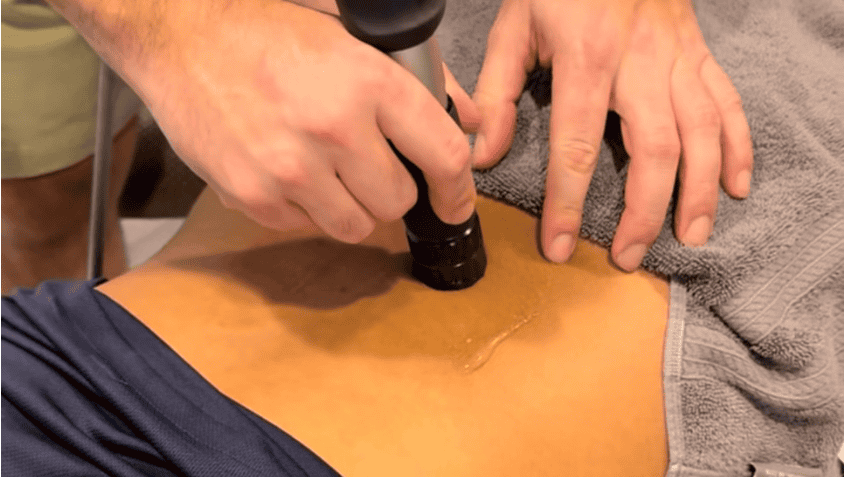
A note on adjunct technologies: Shockwave therapy, spinal decompression, laser therapy, and PEMF are not appropriate for every patient. Their inclusion in a treatment plan is always indication-based. Your clinical findings, imaging (where applicable), and response to initial care guide those decisions. We will always explain why a specific tool is being recommended for your case.

Adjunct Technologies (Indication-Based)
Not every technology is appropriate for every patient. When indicated by clinical findings, we may incorporate the following:
- Spinal Decompression: for disc herniation, degenerative disc disease, or nerve root compression where mechanical traction is likely to reduce pressure on the affected segment
- Shockwave Therapy: for chronic myofascial or tendinous pain that has not responded to manual therapy alone
- Low-Level Laser Therapy: to reduce inflammation and support cellular healing in both acute and chronic presentations
- PEMF Therapy: to support tissue repair and reduce pain sensitization in patients with persistent or post-injury lower back pain
What the Research Says: Evidence Snapshot
We believe patients deserve to understand the evidence behind their care. The following is a plain-language summary of the research most relevant to chiropractic and conservative management of sciatica. No single study tells the whole story, and we note limitations where they exist.
Cochrane Systematic Review (Rubinstein et al., updated 2019) Spinal manipulation provides modest short-term improvement in pain and function for adults with acute and subacute lumbar disc-related sciatica. Effect sizes are moderate, and the optimal number of sessions varies by individual. Takeaway: supports chiropractic care as a reasonable first-line option.
American College of Physicians Clinical Practice Guideline (2017) Non-pharmacological therapies, including spinal manipulation, exercise, and heat, are recommended as first-line treatment before medications for acute and subacute low back pain, including presentations with radiculopathy. The guideline covers low back pain broadly, and specific sciatica subgroup evidence is more limited. Takeaway: strongly supports conservative care before medication for most patients.
RCT: Spinal Decompression for Disc Herniation (Apfel et al., 2010) Non-surgical spinal decompression significantly reduced pain and disability in adults with confirmed lumbar disc herniation. Sample size was moderate and longer-term follow-up data are limited. Takeaway: supports decompression as a targeted, non-surgical option for appropriate disc-related cases.
RCT: Exercise Therapy vs. Passive Care (Luijsterburg et al., 2007) Active exercise-based rehabilitation improves outcomes in adults with subacute to chronic lumbar radiculopathy compared to passive treatment alone. Adherence to home exercise programs varies significantly. Takeaway: underscores the value of active rehabilitation as part of any sciatica treatment plan.
Observational Study: Natural History of Disc Herniation (Zhong et al., 2017) The majority of lumbar disc herniations show spontaneous reduction or resorption over 12 to 24 months on repeat MRI in adults with confirmed herniation and radicular symptoms. Not all patients had corresponding clinical improvement, and imaging findings do not always match symptoms. Takeaway: supports conservative, time-appropriate management for most disc-related sciatica cases.
The evidence consistently supports conservative, multimodal care as the appropriate first-line approach for most patients with sciatica. Surgery remains an option for specific clinical presentations, particularly progressive neurological deficits or failure of conservative management after an adequate trial period. We will always discuss your options clearly and refer when appropriate.
Patient Case Study: From Sharp Leg Pain to Back on the Move
The following is a de-identified composite case drawn from typical presentations seen at our South Florida clinics. It is provided for educational purposes only and does not represent a guarantee of outcomes for any individual patient.
Patient Profile Male, 47 years old. Works in sales and sits for approximately six to seven hours per day during meetings and while driving. Active on weekends and enjoys recreational tennis and cycling.
Baseline Limitations Sharp, shooting pain from the left buttock to the back of the left knee. Rated 7 out of 10 on average, and 9 out of 10 with prolonged sitting. Unable to complete a full workday without standing every 20 minutes. Had stopped playing tennis entirely for six weeks before his first visit.
Assessment Findings Positive straight-leg raise at 45 degrees on the left. Reduced L4-L5 left segmental mobility. Tight piriformis and lumbar paraspinal musculature bilaterally. Mild reduction in left knee deep tendon reflex. No red flags identified.
Plan Duration 12-week structured care plan with formal reassessment at Week 4 and Week 8.
Interventions Used Cox flexion-distraction technique at the L4-L5 level, Active Release Technique to the piriformis and lumbar multifidus, sciatic nerve flossing exercises as a home program, non-surgical spinal decompression therapy initiated at Week 3 following re-examination, and progressive core and hip stabilizer rehabilitation through Phases 2 and 3.
Milestones
- Week 2: Pain reduced to 4 out of 10. Able to complete a full workday with one to two standing breaks.
- Week 4: Positive straight-leg raise now at 65 degrees. Referred pain no longer reaches the knee. Patient began walking 30 minutes daily.
- Week 8+: Pain rated 1 to 2 out of 10. Returned to recreational cycling. Returned to tennis with a modified warm-up protocol at Week 10.
Outcome Metrics Pain dropped from 7 out of 10 to 1 out of 10 at 12 weeks. The patient returned to full workday productivity and recreational sport. He reported feeling in control of his condition for the first time since symptom onset.
Maintenance Plan Monthly maintenance adjustment visits, an ongoing home core stabilization program, and an annual clinical reassessment.

Interventions Used: Cox flexion-distraction technique at the L4-L5 level, Active Release Technique to the piriformis and lumbar multifidus, sciatic nerve flossing exercises as a home program, non-surgical spinal decompression therapy initiated at Week 3 following re-examination, and progressive core and hip stabilizer rehabilitation through Phases 2 and 3.
Milestones
- Week 2: Pain reduced to 4 out of 10. Able to complete a full workday with one to two standing breaks.
- Week 4: Positive straight-leg raise now at 65 degrees. Referred pain no longer reaches the knee. Patient began walking 30 minutes daily.
- Week 8+: Pain rated 1 to 2 out of 10. Returned to recreational cycling. Returned to tennis with a modified warm-up protocol at Week 10.
Outcome Metrics Pain dropped from 7 out of 10 to 1 out of 10 at 12 weeks. The patient returned to full workday productivity and recreational sport. He reported feeling in control of his condition for the first time since symptom onset.
Maintenance Plan Monthly maintenance adjustment visits, an ongoing home core stabilization program, and an annual clinical reassessment.

Ready to Seize Your Day? Start Here.
Sciatica does not have to dictate your days. Whether you are dealing with a recent flare or a pattern that has persisted for months, the team at Carpe Diem Chiropractic is here to help you find the root cause, build a realistic plan, and get back to the life you want to live.
We serve patients throughout South Florida, including Fort Lauderdale, Plantation, Broward County, Davie, Weston, and surrounding communities. With two convenient clinic locations and a team of board-certified chiropractors, physical therapy-certified clinicians, and soft-tissue specialists, we are equipped to manage a wide range of sciatica presentations, from acute first episodes to complex, persistent cases.
What your first visit includes:
- A thorough one-on-one intake conversation, no rush, no assembly line
- Full physical and neurological examination
- A clear explanation of your findings and what they mean
- An honest assessment of whether chiropractic care is appropriate for your case
- A recommended care plan with realistic timelines and goals
Fort Lauderdale: 1650 SE 17th Street, Suite 103 | (954) 368-5483
Plantation: 300 NW 70th Avenue, Suite 100 | (954) 368-5483

What Our Patients Are Saying


Meet the Carpe Diem Chiropractic Team




Watch: Understanding and Treating Sciatica in South Florida
Download Your Free Sciatica Relief Guide
Not sure where to start? Take the first step at home.
Our free PDF guide, written by the clinicians at Carpe Diem Chiropractic, gives you the tools to better understand your symptoms and take meaningful action right now. It is not a substitute for a clinical assessment, but it is a solid starting point.
Inside your free guide:
- A simple self-assessment checklist to help identify sciatica versus other causes of leg pain
- 3 clinician-approved stretches safe to try at home during a sciatica flare
- A red flag symptom list showing when to skip home care and call us immediately
- What to expect at your first Carpe Diem Chiropractic visit

Is Your Sciatica Trying to Tell You Something? Take the Quiz
References and Medical Review
- Rubinstein SM, Terwee CB, Assendelft WJ, de Boer MR, van Tulder MW. Spinal manipulative therapy for acute low-back pain. Cochrane Database Syst Rev. 2012;9:CD008880. Updated 2019.
- Qaseem A, Wilt TJ, McLean RM, Forciea MA. Noninvasive treatments for acute, subacute, and chronic low back pain: a clinical practice guideline from the American College of Physicians. Ann Intern Med. 2017;166(7):514-530.
- Apfel CC, Cakmakkaya OS, Martin W, et al. Restoration of disk height through non-surgical spinal decompression is associated with decreased discogenic low back pain: a retrospective cohort study. BMC Musculoskelet Disord. 2010;11:155.
- Luijsterburg PA, Verhagen AP, Ostelo RW, et al. Effectiveness of conservative treatments for the lumbosacral radicular syndrome: a systematic review. Eur Spine J. 2007;16(7):881-899.
- Zhong M, Liu JT, Jiang H, et al. Incidence of spontaneous resorption of lumbar disc herniation: a meta-analysis. Pain Physician. 2017;20(1):E45-E52.
- Koes BW, van Tulder MW, Peul WC. Diagnosis and treatment of sciatica. BMJ. 2007;334(7607):1313-1317.
- Konstantinou K, Dunn KM. Sciatica: review of epidemiological studies and prevalence estimates. Spine. 2008;33(22):2464-2472.
Reviewed by: Carpe Diem Chiropractic Clinical Team, Fort Lauderdale and Plantation, Florida
Last reviewed: May 2026 | Next review scheduled: May 2027
Credentials: Board Certified Chiropractors (DC) | Physical Therapy Certified | Dry Needling Certified | ART Certified | IASTM Certified
This page is intended for informational purposes only and does not constitute medical advice. Always consult a qualified healthcare provider for diagnosis and treatment.
Frequently Asked Questions About Sciatica
Yes, and ideally sooner rather than later. Recurrent sciatica is often a sign that the underlying mechanical contributors have not been fully addressed. Treating between flares gives you the best opportunity to strengthen those areas before the next episode occurs. Proactive care is far more effective than reactive care for recurrent presentations.
In most cases, sciatica does not cause permanent damage when managed appropriately and in a timely manner. Prolonged or severe nerve compression, however, can result in persistent weakness or numbness that may take longer to resolve. This is why monitoring for progressive neurological symptoms, particularly increasing weakness or new bladder or bowel changes, is so important. These symptoms require urgent medical evaluation, not a wait-and-see approach.
For the majority of sciatica cases, including those caused by herniated discs, lumbar joint dysfunction, and piriformis syndrome, chiropractic care is an evidence-supported first-line treatment. Current clinical guidelines recommend conservative management before escalating to specialist referral or surgical evaluation. If your case requires specialist input or imaging that falls outside our scope, we will refer you promptly.
Your first visit typically runs 60 to 75 minutes. We begin with a thorough intake conversation to understand your history, symptoms, and goals. We then complete a full physical and neurological examination, including the orthopedic and functional tests described on this page. If necessary, imaging will be taken to rule out contraindications to chiropractic care and make sure that conservative treatment is warranted for your case. After findings are reviewed, we will begin with treatment that will help alleviate symptoms and pain. If we determine that the case is too severe for conservative treatment, we will let you know immediately and refer you to someone who can better assist.
In most cases, yes, though the type and intensity of exercise matters enormously. High-impact activities, heavy axial loading, and positions that reproduce sharp leg pain are best avoided early in recovery. Gentle walking, specific nerve mobilization exercises, and clinician-directed core work are typically safe and beneficial. We will guide you through exactly what to do and what to avoid at each stage of your recovery.
Not necessarily, especially in the early stages. Clinical guidelines do not support routine MRI imaging for uncomplicated sciatica within the first four to six weeks. If your symptoms are not responding to conservative care after an adequate trial, if red flags are present, or if surgical consultation becomes relevant, MRI imaging will be ordered. We will make that recommendation clearly if and when it is clinically warranted.