
Sciatica – What it is and How Chiropractic Treatment Can Help.

Author: Dr. Stefania Sobrero, DC
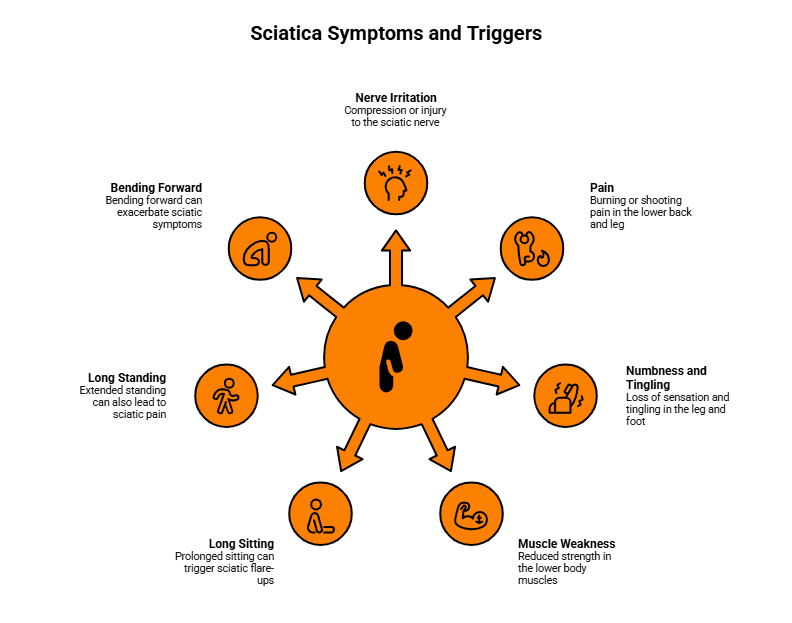
If you are dealing with pain in the lower back that radiates into the front or side of the leg and tends to travel down to the knee or sometimes all the way down to the foot, it is likely that you are experiencing sciatica. It is estimated that around 40% of the population will experience sciatica in their lifetime. Fortunately, most cases can be treated with conservative care.
What is Sciatica
A bulging or herniated disc are the most common causes of sciatica. Between each of our vertebrae (the bones that make up our spine), we have intervertebral discs. These discs are made up of a jelly-like consistency and are responsible for allowing space between the bones. This space is especially important because it also allows space for our nerves to pass through freely at each level of the spine. When compression is placed on the discs, the jelly inside of it starts to push out on to the nerves, causing a blockage that is responsible for nerve symptoms.
Piriformis syndrome is also a common cause of sciatica. This is a muscle in the buttock that commonly becomes tight or goes into spasm due to long periods of sitting or overuse. The sciatic nerve runs either through the muscle or over it and when it becomes inflamed, puts pressure on the nerve.
Other causes are joint restrictions in the lumbar spine or pelvis, poor posture, and pregnancy.
Causes of Sciatica
A bulging or herniated disc are the most common causes of
sciatica. Between each of our vertebrae (the bones that make up our spine), we
have intervertebral discs. These discs are made up of a jelly-like consistency
and are responsible for allowing space between the bones. This space is
especially important because it also allows space for our nerves to pass
through freely at each level of the spine. When compression is placed on the
discs, the jelly inside of it starts to push out on to the nerves, causing a
blockage that is responsible for nerve symptoms.

Piriformis syndrome is also a common cause of sciatica. This
is a muscle in the buttock that commonly becomes tight or goes into spasm due
to long periods of sitting or overuse. The sciatic nerve runs either through
the muscle or over it and when it becomes inflamed, puts pressure on the nerve.
Other causes are joint restrictions in the lumbar spine or
pelvis, poor posture, and pregnancy.
How Chiropractic Treatment Can Help
The goal of treatment is to take pressure off the compressed nerve, create mobility in the spine, and correct any imbalances of muscles that can contribute to compression.
- Spinal Adjustment
When joints are not moving well, the surrounding tissues begin to compensate and put extra pressure on the nerves. Receiving regular adjustments from your Chiropractor can improve mobility in the spine and pelvis and improve flexibility.
- Non-Surgical Spinal Decompression
Decompression therapy involves laying on a special table that gently relaxes and stretches the spine in a controlled manner, specifically where there is a bulge or herniation of a disc. The traction force creates space in between the vertebrae, reducing pressure on the disc and encourages the bulged or herniated material to move away from the nerve. Decompression also brings fluid and nutrients into the discs, helping them to hydrate and improve circulation.
- Stretching and Strengthening Exercises
Stretching helps to reduce tension on muscles that can be pulling on nerves. When flexibility is improved, the muscles and surrounding tissues have a chance to relax and allow the nerves to move more freely.
Strengthening exercises are essential for lower back stabilization. Making sure to strengthen the core, glutes, and hips will all help to keep good spinal posture and reduce the risk of further injury to the discs.

Chiropractic care has been shown to be a great treatment option for sciatica. A tailored and all-encompassing treatment plan gets to the root cause of why you are experiencing sciatica and works to both remove the pain and build a stronger foundation to support long-term healing. The goal of this type of treatment is to help the body function and move better to allow you to get back to doing what you love, pain free.