
Fight or Flight: How Your Nervous System Responds to Stress

By: Stefania Sobrero, DC
Do you feel like you’re constantly on edge – like you just cannot relax, no matter what you do? This is a sign that your nervous system is working in overdrive, stuck in high stress mode, also known as the “fight or flight” response. This has become common, especially with modern day stressors. A lot of us have demanding jobs, many family responsibilities, and poor sleep schedules, resulting in sub-optimal rest.
The fight or flight response was designed to help the body navigate through danger and emergencies, but it has a difficult time distinguishing between those situations and our common and oftentimes, daily stress filled environments. The result? Our bodies being stuck in high stress mode for far longer than we were designed for.
What is the Fight or Flight Response?
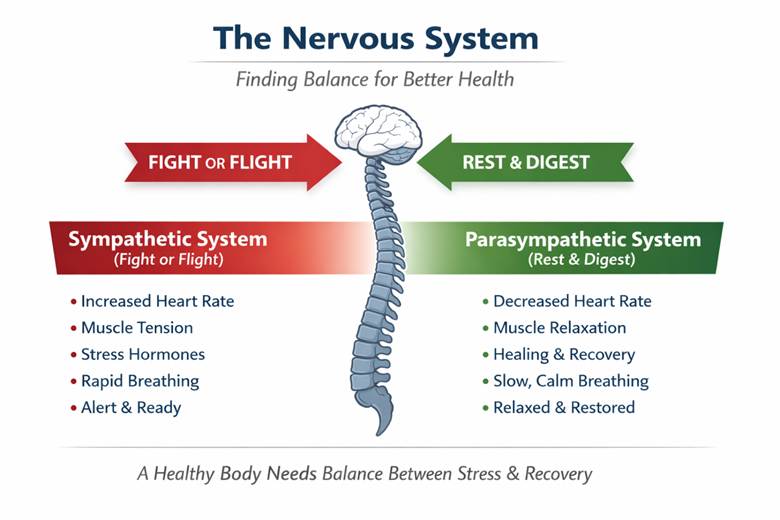
The ANS or Autonomic Nervous System is responsible for monitoring the involuntary functions of the body. This includes breathing rate, heart rate, and digestion. There are two branches of the ANS:
The Sympathetic Nervous System (SNS) or Fight or Flight, which prepares the body to handle stress by increasing your blood pressure and heart rate, and decreases other, less important functions during emergencies, like our immune function and digestion.
The Parasympathetic Nervous System (PNS) or rest and digest, supports functioning when we are in more relaxing times – like digestion, sleep, and promoting healing.
When we are stuck in a constant loop of stress response, whether that be in the form of physical, emotional, or chemical, there is less of a chance for our bodies to heal and thrive.
The Correlation Between Chronic Stress and Spinal Misalignment
We often notice stress physically manifesting in the body and one of the ways it shows up is with poor posture. During stressful times, we tend to clench our jaws, shoulders round forward, and head comes forward – usually without realizing it happening. Although at the time we do not realize, over long periods, these changes place strain on the spine and muscles, which typically leads to constant discomfort or pain.
Poor posture due to prolonged stress can lead to misalignment in the spine, which interferes with normal functioning of nerves. When misalignment occurs, the muscles surrounding the area must compensate and typically results in symptoms such as back pain, headaches, difficulty focusing, and digestive issues.
How Chiropractic Can Help
Chiropractic can address these issues by helping to correct both the misalignments and postural issues. Regular adjustments help to alleviate tension and restore nerve communication from the brain to the body. When communication is restored, nerve function begins to improve, and the body begins to efficiently adapt to the stressors placed on it. Patients often begin to feel more relaxed, have improved sleep, and begin to experience less “on edge” feelings from the stress.
If you are experiencing any of these stress related symptoms, schedule a free consultation at Carpe Diem Chiropractic and learn how we can help.