
Top 5 Signs You Need a ChiropractorEvery day, people wake up knowing that someone else’s life, safety, or well-being depends on them. Nurses, first responders, and other front-line professionals show up with courage, care, and commitment — often putting their own health on the line.
But while these careers demand strength and resilience, they also place tremendous stress on the body — especially the spine. Over time, long hours, heavy lifting, and constant tension can lead to misalignments, nerve irritation, reduced mobility, and chronic pain.
Your spine is more than a column of bones — it’s the foundation of your entire body. It protects your nervous system, powers every movement, and influences your strength, balance, focus, and even your sleep. When your spine isn’t functioning properly, every part of your performance and well-being can suffer.
The Hidden Wear and Tear of Demanding Careers
- Nurses & Healthcare Workers: Lifting patients, leaning during procedures, and being on their feet for hours leads to chronic tension in the neck, lower back, and shoulders.
- Firefighters & EMTs: Sudden movements, heavy equipment, and unstable environments put intense force on the spine and hips — increasing the risk of disc injuries and sciatica.
- Police & Security Personnel: Long hours seated in patrol cars and heavy utility belts strain the lumbar spine and hips, causing stiffness and nerve compression.
- Skilled Trades & Laborers: Repetitive lifting, bending, kneeling, and twisting slowly misalign the spine and reduce flexibility, increasing long-term injury risk.
Without care, these stresses accumulate silently — until pain interferes with sleep, movement, job performance, or career longevity.
How Chiropractic Care Helps Those Who Help Others
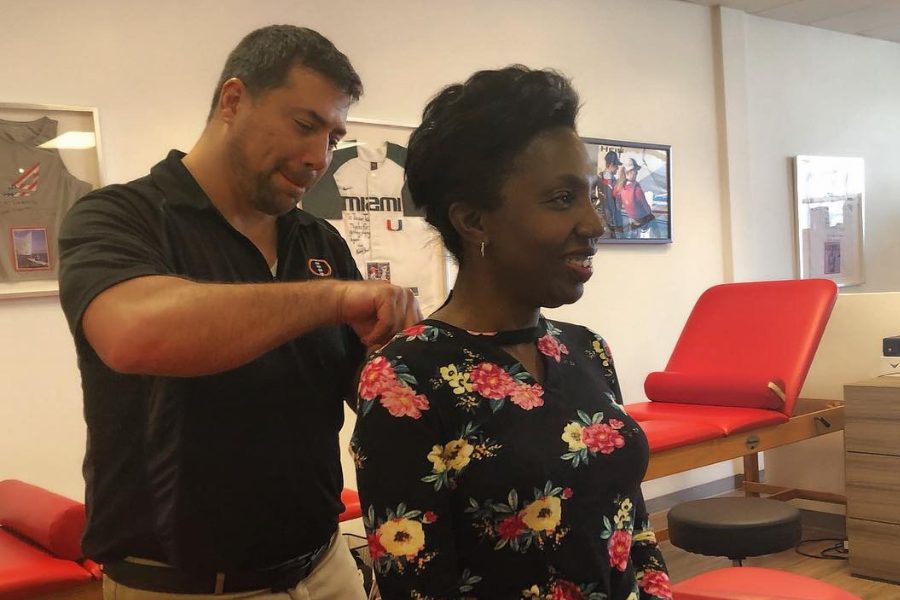
At Carpe Diem Chiropractic we help frontline professionals stay strong, mobile, and pain-free through spinal care and functional rehabilitation.
- Restores Alignment and Mobility
Chiropractic adjustments gently correct misalignments that cause pain, stiffness, and nerve irritation, helping the body move as it should. - Prevents Small Issues from Becoming Career-Limiting Injuries
Routine care helps identify early signs of spinal stress before they develop into herniated discs, chronic pain, or mobility limitations. - Faster Recovery and Better Performance
Proper spinal alignment improves blood flow, reduces inflammation, and enhances muscle coordination — meaning better recovery between shifts and workouts. - Supports Mental Clarity and Stress Relief
A healthy spine supports a healthy nervous system. Many patients report fewer headaches, better sleep, and improved focus — essential for high-pressure jobs.
Backed by Evidence, Not Just Experience
Chiropractic care isn’t just popular — it’s supported by strong research:
- A study of over 2 million workers’ compensation claims found that employees with low back pain who saw chiropractors had lower medical costs and returned to work sooner than those receiving other care (Wang et al., 2022).
- Research in BMJ Open found that patients who began care with a chiropractor had significantly lower odds of long-term opioid use (Kazis et al., 2019).
- Another study showed chiropractic spinal manipulation for nerve-related back pain was linked with reduced tramadol prescriptions, a commonly used opioid-like medication (Trager et al., 2024).
- Systematic reviews published in The BMJ and Cochrane Database concluded that chiropractic spinal manipulation is as effective as other guideline-recommended treatments for low back pain — without drugs or surgery (Rubinstein et al., 2019).
For nurses, first responders, police officers, and labor-intensive workers, this means chiropractic care is not only safe — it is a preventive, evidence-based way to stay strong, mobile, and ready for duty.
Your Body Is Your Most Important Tool — Protect It
You train your mind. You train your skills.But do you train your spine to handle the demands of your career?
When your spine is aligned, your body moves better. You recover faster. You think clearer. You sleep deeper. You perform at your best.
At Carpe Diem Chiropractic, we help those who serve others stay healthy, powerful, and pain-free.
Take Care of Yourself — So You Can Keep Taking Care of Others
If your work depends on strength, focus, and physical resilience, it’s time to invest in your spine.
📍 Carpe Diem Chiropractic – Fort Lauderdale & Plantation, FL
💬 Book your consultation today and discover how chiropractic care can protect your spine, prevent injury, and help you keep doing what you do best.
Seize the day. Not your back.
References
Kazis, L. E., Ameli, O., Rothendler, J., Bateman, B. T., Barnett, M. L., & Weinstein, J. N. (2019). Association between initial provider type and long-term opioid use in patients with new-onset low back pain. BMJ Open, 9(9), e028633. https://doi.org/10.1136/bmjopen-2018-028633
Rubinstein, S. M., Terwee, C. B., Assendelft, W. J. J., de Boer, M. R., & van Tulder, M. W. (2019). Spinal manipulative therapy for chronic low-back pain: An updated systematic review. BMJ, 364, l689. https://doi.org/10.1136/bmj.l689
Trager, R. J., Foad, A., Naseer, Z., Strauch, C. J., & Wilson, F. (2024). Association of chiropractic spinal manipulation with tramadol prescription for radicular low back pain. BMJ Open, 14(5), e078105. https://doi.org/10.1136/bmjopen-2023-078105
Wang, D., Whedon, J. M., Davis, M. A., Haas, M., & Murphy, R. (2022). Chiropractic care for workers with low back pain. Workers’ Compensation Research Institute.